Reuben Klamer

An American Inventor

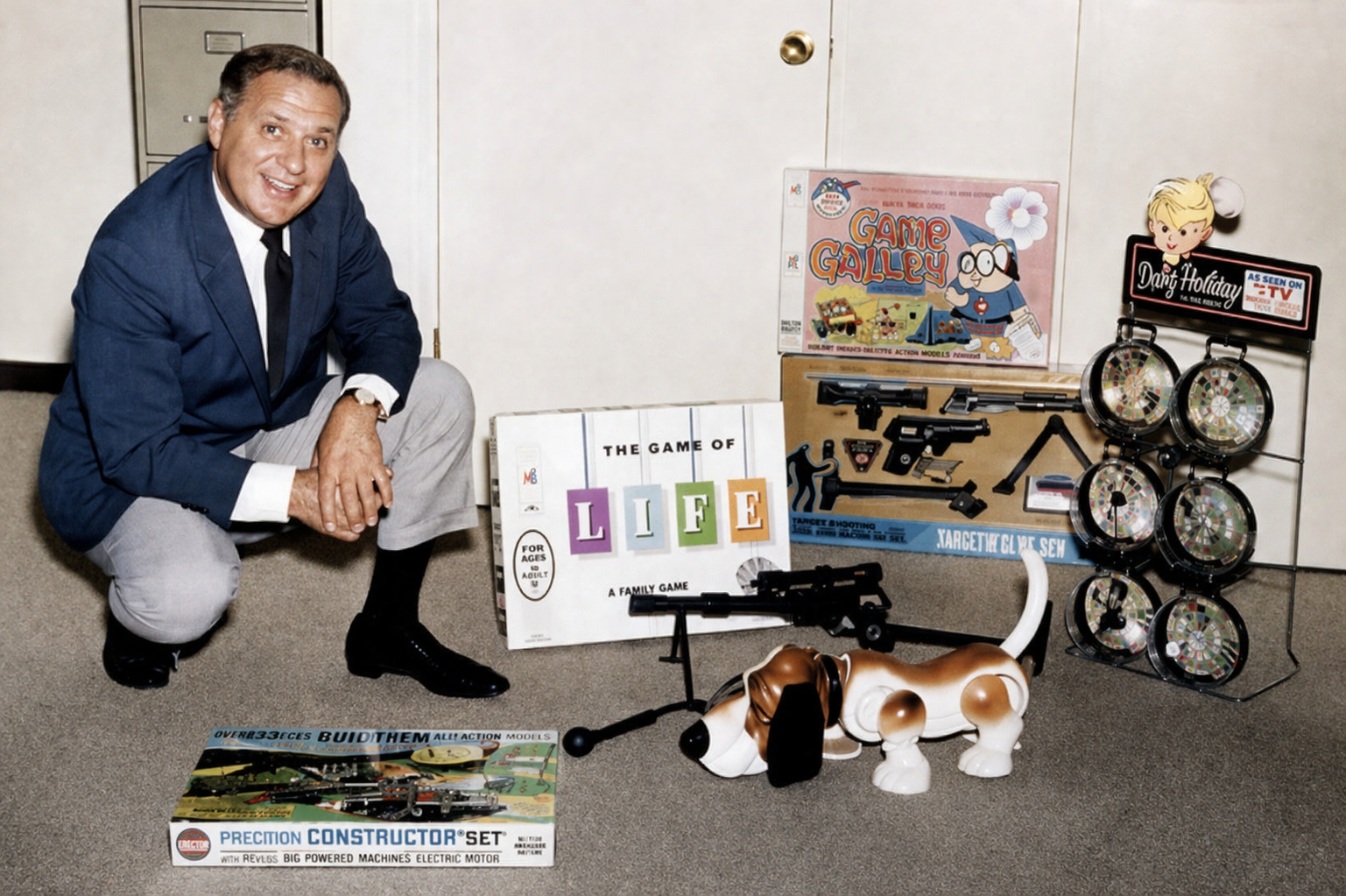
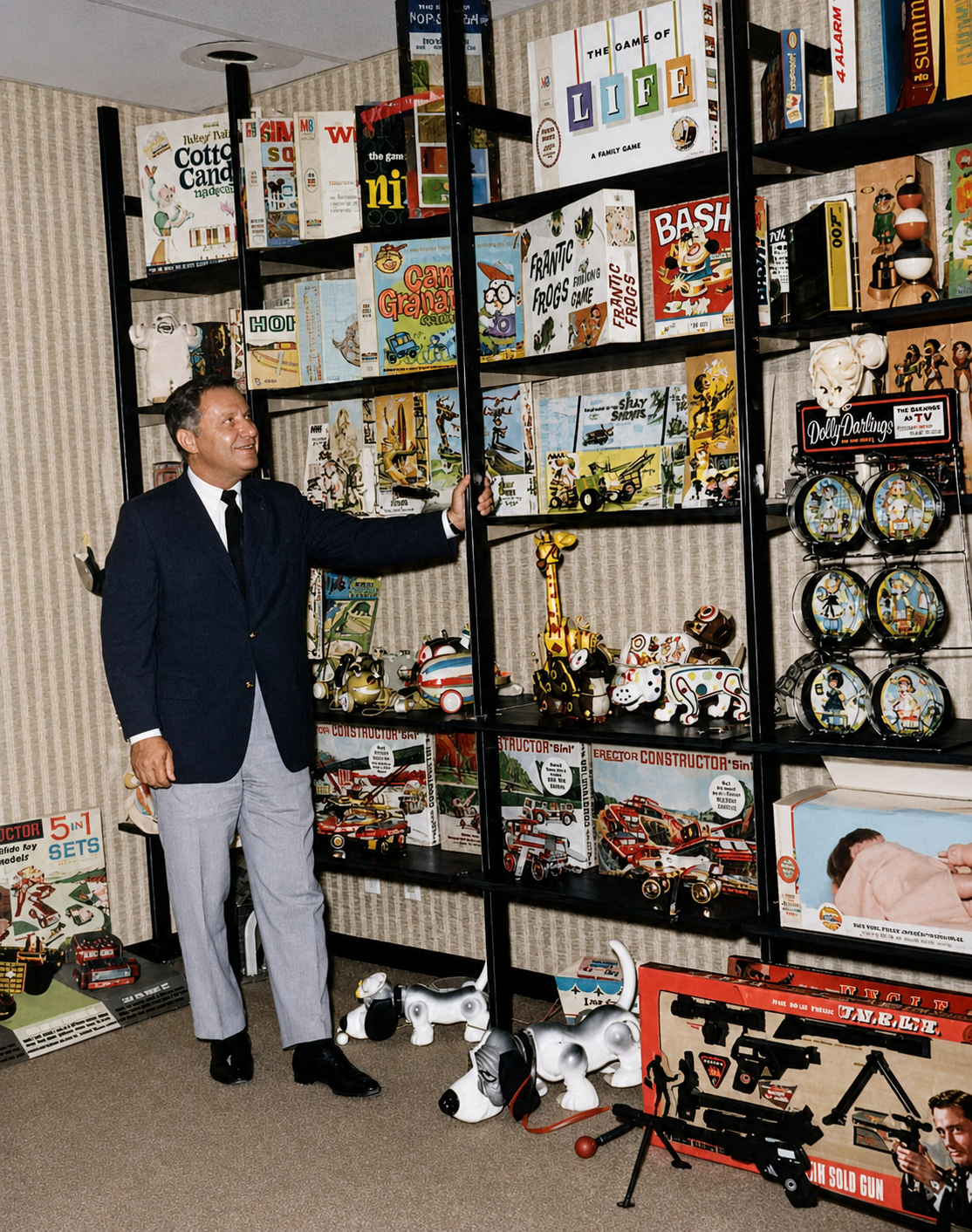
Few people in history have impacted how the world plays like inventor/creator/designer Reuben Klamer.  Most widely know for his creation of the iconic Game Of Life board game, Klamer was also responsible for around 200 games and toys to market over a decades long career.

Here’s a look at some amazing images of Reuben.  More to come!

A Brief History of Reuben Klamer & The Game Of Life

The Strong National Museum of Play (National Toy Hall of Fame inductee entry – www.museumofplay.org — inducted 2010):
 
“As 1960 approached, the Milton Bradley Company enlisted independent inventor Reuben Klamer to come up with a game that would commemorate the firm’s 100th anniversary. Klamer took the ‘Life’ name from the 1860 predecessor but created a completely new game for a new era. The Game of Life charted fresh territory for board games with its three-dimensional board and its integral plastic spinner.”
 
The Smithsonian Institution
(via the Toy Association’s official statement, consistent across all industry and obituary records):
 
“He [Reuben Klamer] is perhaps best known as the originator of the modern The Game of Life, which in 1981 became part of the permanent Archives of Family Life at the Smithsonian Institution in Washington, DC, and is second in popularity only to Monopoly.”
 

reuben klamer's
Game of life

The original 1960 The Game of Life board game by Reuben Klamer


Strong Museum Hall Of Fame

Inducted Year: 2010

Source: The Strong National Museum of Play

As 1960 approached, the Milton Bradley Company enlisted independent inventor Reuben Klamer to come up with a game that would commemorate the firm’s 100th anniversary. Klamer took the “Life” name from the 1860 predecessor but created a completely new game for a new era. The Game of Life charted fresh territory for board games with its three-dimensional board and its integral plastic spinner. To promote the game, the Milton Bradley Company hired popular radio and television personality Art Linkletter to add his “personal endorsement.” Since then, the game has been updated several times and both electronic and specially-themed versions are now widely available. One of the best-selling games of all time, Life has also been translated into at least 20 languages.

Playing The Game of Life parallels a person’s life in several ways. Players must choose between “college” and “business” early in the game. Payday comes sooner for the businessperson, but college may mean higher paychecks in the end. Marriage and children usually occur during the game. Players in 1960 could end up in the Poor Farm or land happily in Millionaire Acres. The 2010 version offers everyone more comfortable destinations, sending players to either Countryside Acres or Millionaire Estates. In any event, chance and luck play the largest part in the journey. The game has been criticized over the years for being based solely on luck and for rewarding risk-taking, but Life has stood the test of time—and family game night would not be as much fun without it.

The Game of Life board game artifacts

The accurate history of Reuben Klamer's 1960 The Game Of Life

(An Important Clarification)

The 1960 Game of Life was a wholly original work created by Reuben Klamer. While the Milton Bradley 1860 Checkered Game of Life served as one historical point of inspiration, specifically the word "life" according to Reuben, it is an entirely different game than the iconic Game of Life, created by Reuben Klamer.  A side by side comparison of the two games clearly illustrates this.

Additionally, artist Bill Markham was hired by Reuben Klamer to help build the prototype of The Game Of Life, a role the federal courts confirmed was that of a contracted developer working at Klamer's direction and expense. (Markham Concepts, Inc. v Hasbro, Inc., No. 19-1927 (1st Cir. 2021)

The Game of Life’s creation, authorship, and commercial history are well documented through official and reputable sources including the Smithsonian Institution, The Strong National Museum of Play, and relevant legal records.

It was Reuben Klamer’s 1960 Game of Life game that became widely recognized and went on to sell tens of millions of copies worldwide and become a worldwide part of how we play!

reuben klamer: A life well lived

ny times obituary: by Katharine Q. “Kit” Seelye

Reuben Klamer, Toy Titan Who Created the Game of Life, Dies at 99

He developed an estimated 200 toys and other items, including a phaser rifle for “Star Trek.” But his best-known product was a game for “literally everyone on earth.”

Reuben Klamer (left) and Art Linkletter (right) with prototype for the Game of Life in 1959

The inventor Reuben Klamer, left, with the television host Art Linkletter in an undated photo. Mr. Linkletter’s endorsement helped draw attention to the Game of Life, which Mr. Klamer created, when it was introduced in 1960. 
(Photo Courtesty of: Reuben Klamer Toylab Photo Archive)

Reuben Klamer, an inventor who dreamed up the Game of Life and many other toys and games that entertained young baby boomers in the pre-internet 1950s and ’60s as well as their children in the ’80s and ’90s, died on Sept. 14 at his home in the La Jolla neighborhood of San Diego.

He was 99.

His son Jonathan confirmed the death.

Mr. Klamer, his son said, was young at heart and inquisitive, with an instinct for trends that would captivate the postwar generation.

His creations included his own version of the hula hoop and a variation on the Erector Set. He came up with a Pink Panther show car built on an Oldsmobile chassis, which he used to help promote the “Pink Panther” cartoon series.

He also worked closely with television producers and built props for popular shows, including the Starfleet phaser rifle, which could stun or disintegrate living creatures, for the original “Star Trek” series. (He had an agreement for the toy rights to the rifle, he said, but it fell apart, and his toy phaser was never produced.) He made a special Napoleon Solo gun for “The Man From U.N.C.L.E.” that was so popular, the gun itself received fan mail. (He successfully created a toy version of that one.)

But Mr. Klamer’s best-known invention was the Game of Life, a board game in which, in its original incarnation, the winner was the person who accumulated the most money.  The game, introduced in 1960, reflected the values of the booming suburban culture: Players plodded along a conventional path that took them through school, work, marriage, children and retirement.